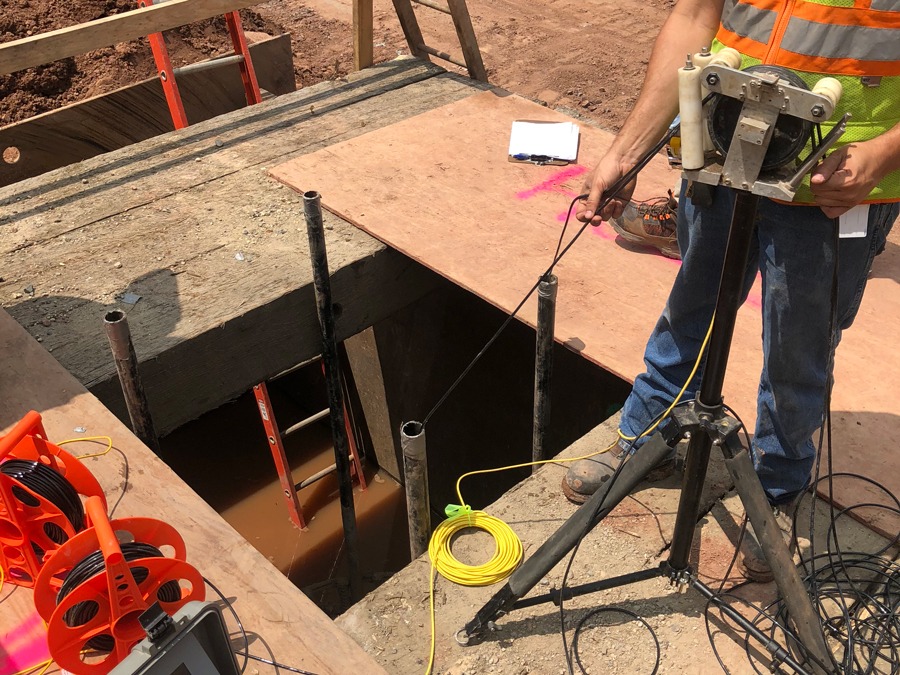
The construction and geotechnical industries are increasingly turning to advanced technologies to ensure the safety and integrity of subsurface structures. Among these technologies, Crosshole Tomography (CHT) stands out as a sophisticated method for assessing the internal condition of concrete structures and other subsurface elements. By providing high-resolution images that reveal the internal characteristics of materials, CHT allows engineers to detect anomalies and make informed decisions. This article delves into the potential of Crosshole Tomography, exploring its applications, benefits, and the future of this innovative technique.
Understanding Crosshole Tomography
What is Crosshole Tomography?
Crosshole Tomography is a non-destructive testing method used to evaluate the integrity of subsurface structures. By transmitting and receiving ultrasonic waves between boreholes, this technique can map internal anomalies with precision. The data collected helps in visualizing the interior of structures, identifying defects such as voids, cracks, and other discontinuities.
Applications of Crosshole Tomography
Crosshole Tomography is widely applied across various domains, including:
- Foundation Assessment: Essential for evaluating the integrity of pile foundations.
- Tunnel Construction: Used to ensure the stability and safety of tunnel linings.
- Dam and Bridge Inspections: Vital for assessing potential weaknesses in large infrastructure.
- Geotechnical Investigations: Helps in assessing rock and soil properties for construction planning.
Advantages of Crosshole Tomography
Crosshole Tomography offers several advantages that make it a preferred choice for subsurface investigations:
- High-Resolution Imaging: Provides detailed insights into the internal structure, enabling precise anomaly detection.
- Non-Destructive: As a non-invasive method, it preserves the integrity of the tested structures.
- Comprehensive Data: Offers a complete picture of the subsurface conditions, facilitating informed decision-making.
- Versatility: Applicable to a wide range of materials and structures.
For those looking to integrate these advantages into their projects, it is crucial to stay updated with the latest methodologies. Explore advanced guides and tips to enhance your understanding of Crosshole Tomography.
The Future of Crosshole Tomography
Technological Advancements
The future of Crosshole Tomography is promising, with ongoing advancements in technology enhancing its effectiveness and application range:
- Improved Data Processing: New algorithms are being developed to enhance the accuracy and speed of data interpretation.
- Integration with Other Technologies: Combining CHT with other geophysical methods is expected to provide even more comprehensive assessments.
- Enhanced Equipment: Innovations in sensor technology are leading to more portable and efficient equipment.
To navigate these advancements, professionals can discover expert strategies here and ensure they are leveraging the latest tools and techniques.
Expanding Applications
As Crosshole Tomography technology evolves, its application is expected to broaden, further influencing the construction and geotechnical fields. Emerging applications include:
- Underwater Inspections: As sensor technology improves, CHT could play a significant role in underwater infrastructure assessments.
- 3D Modeling: Integration with 3D modeling tools to provide dynamic visualizations of subsurface structures.
For a deeper understanding of how these applications can be adopted, professionals can find out more about this approach.
In conclusion, Crosshole Tomography is revolutionizing how engineers and geotechnical experts assess the integrity of critical infrastructure. By staying informed and adapting to advancements in this field, professionals can significantly enhance their capabilities and project outcomes. Learn about our tailored solutions to keep pace with these exciting developments.

